Exploring the Ubiquitin System: From Mechanisms to Modulators
Our lab is dedicated to dissecting the ubiquitin signaling cascade with a focus on the E1–E2 activation axis and ubiquitin transthiolation. We aim to understand, at atomic resolution, how ubiquitin is first activated by the E1 enzyme, transferred to E2 enzymes, and ultimately attached to target proteins. Our structural biology toolkit—comprising X‑ray crystallography, cryo‑EM, and NMR—lets us capture snapshots of enzyme–substrate complexes in action. We combine these with detailed biochemical and kinetic assays to clarify how ubiquitin’s journey influences cellular signaling and protein degradation pathways.
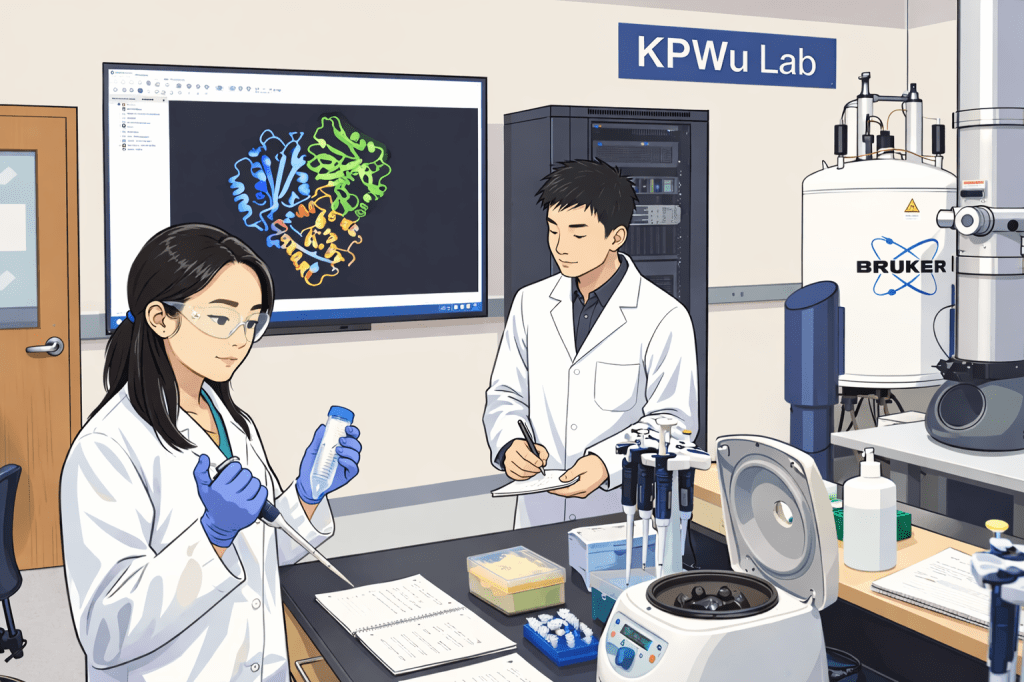
Beyond the activation step, our work extends to E3 ligases and deubiquitinases (DUBs). We’re investigating how E3 ligases achieve specificity in tagging target proteins and how DUBs regulate ubiquitin chain dynamics. By solving high‑resolution structures of these enzyme complexes, we pinpoint key residues and conformational transitions critical for function—laying the groundwork for therapeutic targeting.
The final frontier of our program lies in rational design of binders and small molecules. Guided by structural and kinetic insights, we engineer peptides, antibodies, or small compounds that either enhance or inhibit ubiquitin pathway enzymes. Our goal is to craft precision tools to modulate ubiquitination—with implications for diseases ranging from cancer to neurodegeneration.
Why Join Us?
- Cutting‑edge structure–function science: Experience hands‑on data collection in X‑ray, cryo‑EM, and NMR plus detailed enzymatic assays.
- Translational impact: We work across discovery and design—from basic enzymology to candidate modulators with therapeutic potential.
- Collaborative environment: Our interdisciplinary approach spans protein engineers, structural biologists, bioinformaticians, and chemists.
 KPWu's group research site